How to Recycle Boat Shrink Wrap in Spring
How to recycle boat shrink wrap: why it can't go in curbside bins, cutting it off clean, what to strip, how to roll it, and where collection programs exist.
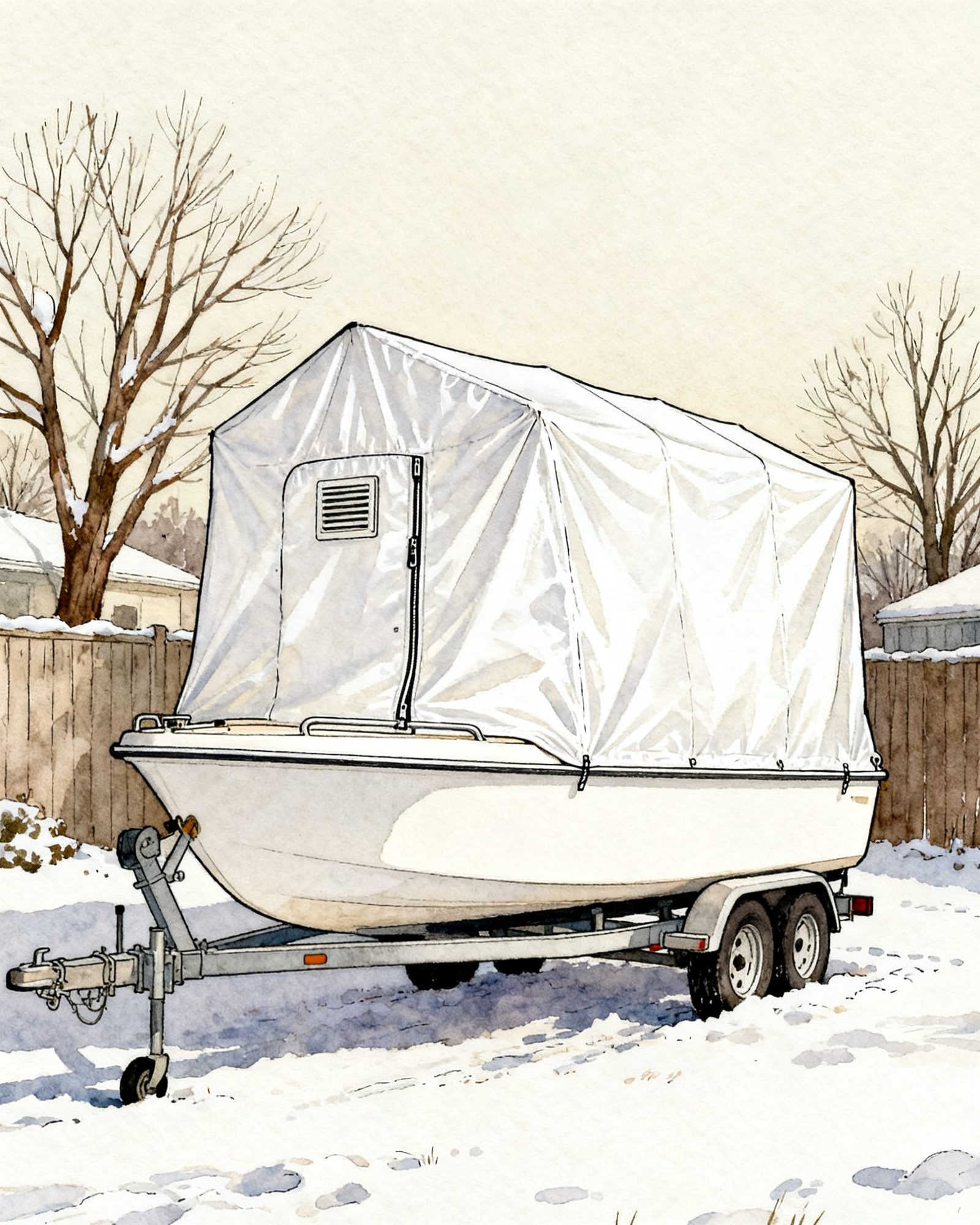
To recycle boat shrink wrap, take it off clean and dry, strip away everything that is not the film itself (strapping, rope, vents, zipper doors, wood), roll it into a tied bundle and take it to a program that collects boat wrap: a Sea Grant or Clean Marina collection, the yard that wrapped the boat, or the dealer that sold the film. It cannot go in a curbside bin. Boat wrap is low-density polyethylene (LDPE), and Woods Hole Sea Grant notes that it requires special processing and “cannot be put into curbside recycling carts and bins.” Programs are seasonal and local, and they are not everywhere, so find yours before spring rather than after the wrap is on the ground.
Why shrink wrap needs its own recycling route
Every fall a boat is wrapped and every spring the wrap comes off. Ohio Sea Grant puts it plainly: “That’s a lot of plastic, and it often ends up in landfills.” New York Sea Grant’s marina pollution guidance notes that shrink wrap is not biodegradable and can become a disposal problem at landfills and trash-to-energy plants, and that used shrink wrap must be managed as solid waste. Connecticut’s 2002 Clean Marina Guidebook lists the same rule as a legal requirement in that state, citing its solid-waste statute.
The film itself is recyclable; the trouble is everything attached to it. Woods Hole Sea Grant explains that the plastic strapping, vents and zippered doors used in boat wrapping are not made of LDPE, and that strapping, ropes and other non-shrink-wrap materials cause problems when the material goes to the recycler. A load of film with straps still in it is a contaminated load.
How to take the wrap off so it can be recycled
Pick a dry day. Wet, muddy wrap is harder to handle and less welcome at a recycler.
- Clear the top. Clear off leftover snow and standing water, so it does not dump into the boat when the film is cut.
- Cut around the belly. Woods Hole Sea Grant’s removal tip is to cut the plastic around the belly of the boat so the straps fall away. A 2006 best-practice sheet from a Canadian plastics industry council, hosted by New York Sea Grant, gives the same idea: if the wrap is cut just above the horizontal belly band, “all of the string will separate instantly.” Follow the knife and ladder precautions in the film maker’s instructions, and do not climb onto the wrap.
- Lift the film off the frame. With a helper, pull the top panel back off the support posts and ridge strap, keeping it off mud and gravel.
- Strip everything that is not film. The best-practice sheet lists it: remove all rope, strapping, wood frames, doors, zippers and other non-shrink plastic materials. That includes the vents and the zip door, and the perimeter band and belly bands that fell away when you cut.
- Keep it clean and dry. The same sheet says no mud, rainwater or leaves. If the film is wet, let it dry before rolling.
- Roll it and tie it. The sheet suggests rolling the wrap into a bundle about five feet long, like a sleeping bag, and tying it with a strip of the shrink wrap itself, which avoids contaminating it with other materials. Woods Hole Sea Grant describes folding and rolling it the same way.
- Store it dry until drop-off. A covered spot keeps it from collecting water and leaves.
Colored film and contamination
The best-practice sheet notes that recycled wrap must meet the end market’s specifications, and its example is a market that took no blue or clear wrap. So the color of the film can decide whether a load is accepted. Ask your program whether it accepts the color of your film, and keep different colors in separate bundles if it asks. The sheet also notes that dry material fetches higher prices from buyers.
Where to take it
Collection depends entirely on where you are. These are the routes to check, in order.
The yard that wrapped the boat
Boating magazine notes that reputable yards recycle shrink wrap for you. If a yard wrapped the boat, ask whether removal and recycling are included; it is one of the questions in what boat shrink wrap costs and why.
The dealer that sold the film
New York Sea Grant and Connecticut’s guidebook both advise checking whether your shrink-wrap manufacturer will recycle its used product. One shrink-wrap maker runs a bag program: its instructions say the used wrap is made into a replacement for cardboard products, that there must be no strapping, rope, doors or foreign material in the wrap, and that the full bag goes back to the marine dealer where you bought the shrink wrap.
Sea Grant and Clean Marina programs
Some regions run collections. The details below belong to each program and season, so check the current rules before you load the truck.
- Cape Cod, Massachusetts. Woods Hole Sea Grant’s 2023 announcement describes a program that ran from April 1 to June 30, 2023. There was no fee or sticker for residents to drop off boat wrap, but the wrap had to be properly prepared or it would not be accepted. In 2022 the program collected and recycled 5.5 tons of shrink wrap, which a materials recycling facility baled and sold on the commodities market.
- Ohio. Ohio Sea Grant reports that the Ohio Clean Marinas Program started its shrink-wrap recycling program in 2006 and, on a page last updated in 2021, that nearly 125 marinas and greenhouses have taken part, diverting 2.3 million pounds of shrink wrap from landfills. Its video shows how to prepare wrap for collection and asks for wrap free of debris and nylon strapping. Ohio Sea Grant also notes that changing market prices and logistics make recycling a challenge.
If you are not near a program like these, ask your marina, your state’s Clean Marina program or the nearest Sea Grant office whether there is a collection point. Where none exists, the wrap goes out with your solid waste under local rules; New York Sea Grant’s guidance says used shrink wrap must be managed as solid waste. Bundle it tightly so loose film does not blow away on the way.
A spring plan, from late winter to drop-off
- Late winter: find the route. Ask the yard, the film dealer and your state’s Clean Marina program or Sea Grant office whether wrap is collected this year, where, in what months and from whom. The Cape Cod program in 2023, for example, ran from April to June.
- Ask what they accept. Bundled or bagged, which colors, and whether a fee applies. The rules differ from one program to the next.
- Have the next cover ready. Once the wrap is off, the boat is open to the weather, so have its summer cover or a plan to launch ready before you cut.
- Cut, strip, roll and tie, following the steps above, on a dry day.
- Drop it off within the program’s window. A bundle that sits in the rain for weeks becomes the wet, dirty load programs refuse.
- Keep the hardware separate. The strapping, vents, door and frame lumber are not part of the recycling load; set them aside rather than tucking them inside the roll.
Reusing wrap instead
Boating magazine calls shrink wrap single-use, and most of it is cut off and replaced each spring. Woods Hole Sea Grant’s program site carries a video on how to re-use shrink wrap for multiple seasons. Reuse depends on taking the wrap off in large, undamaged panels and storing it clean and dry, and it will not suit every boat or every wrap. Short of reuse, leftover film can still go to the same recycling program as the rest.
Making less wrap in the first place
The marina guidance from New York Sea Grant and Connecticut both advise using reusable or recyclable boat covers when possible. A fitted cover over a strong frame is bought once and reused for years, and a boat stored under a roof needs no wrap at all. Whether a cover can do the job for your boat and winter is in the comparison of a boat cover and shrink wrap. If you do wrap again next fall, a few choices make spring easier: ask the yard to recycle it, or buy film from a dealer that takes it back. The fall side of the job is in how to shrink wrap a boat.
Common questions
Can you recycle boat shrink wrap?
Yes, through programs set up for it. Boat wrap is low-density polyethylene, which Woods Hole Sea Grant says requires special processing, and programs run by Sea Grant offices, Clean Marina programs, yards and film dealers have collected it. The catch is that it must be clean and stripped of everything that is not film, or it can be refused.
Can boat shrink wrap go in my curbside recycling bin?
No. Woods Hole Sea Grant says it cannot be put into curbside recycling carts and bins. Take it to a program that collects boat wrap, or ask the yard or the dealer that supplied it.
Where can I recycle boat shrink wrap near me?
Start with the yard that wrapped the boat, the marine dealer that sold the film, your state's Clean Marina program and the nearest Sea Grant office. Collection programs are seasonal and local, so ask in late winter, before the wrap comes off.
Can I reuse my boat shrink wrap next winter?
Boating magazine calls shrink wrap single-use, and most wrap is cut off and replaced every year. Woods Hole Sea Grant's program site does carry a video on reusing shrink wrap for multiple seasons. If reuse is the goal every year, a fitted cover is the tool built for it.
What happens to recycled boat shrink wrap?
It depends on the program. Woods Hole Sea Grant reports that the Cape Cod collection was baled by a materials recycling facility and sold on the commodities market, and one shrink-wrap maker says the used wrap returned through its bag program is made into a replacement for cardboard products.
Sources
- Woods Hole Sea Grant: Cape Cod Boat Shrink Wrap Recycling Program 2023
- Ohio Sea Grant: Shrink Wrap Recycling for Ohio Marinas
- New York Sea Grant: Marina Pollution Prevention - Shrink Wrap
- Best Practices for Recycling Boat Wrap (PDF, hosted by New York Sea Grant)
- Connecticut Clean Marina Guidebook: Shrink Wrap (PDF)
Read next
Boat Shrink Wrap Cost: What Sets the Price
Boat shrink wrap cost explained without guesswork: how yards quote per foot, what raises the price, DIY costs, a cover over several winters, and what to ask.
Boat Cover vs Shrink Wrap: Which Is Better for Winter?
Boat cover vs shrink wrap for winter: snow, ventilation and mildew, winter access, seasons of use, waste and cost factors, and how storage and climate decide it.
How to Shrink Wrap a Boat for Winter, Step by Step
How to shrink wrap a boat yourself: the support frame, perimeter band, heat welding, vents and doors, fire and carbon monoxide safety, and recycling in spring.
Boat Antifreeze: Which Kind and Where It Goes
Marine antifreeze explained: propylene glycol vs automotive ethylene glycol, what a -50°F burst rating means, where it goes on a boat, and how to dispose of it.
Fogging a Boat Engine for Winter Storage
What fogging oil does, when to fog a boat engine, and how it is done on carbureted, fuel-injected and direct-injection outboards and on inboards, safely.