Fogging a Boat Engine for Winter Storage
What fogging oil does, when to fog a boat engine, and how it is done on carbureted, fuel-injected and direct-injection outboards and on inboards, safely.
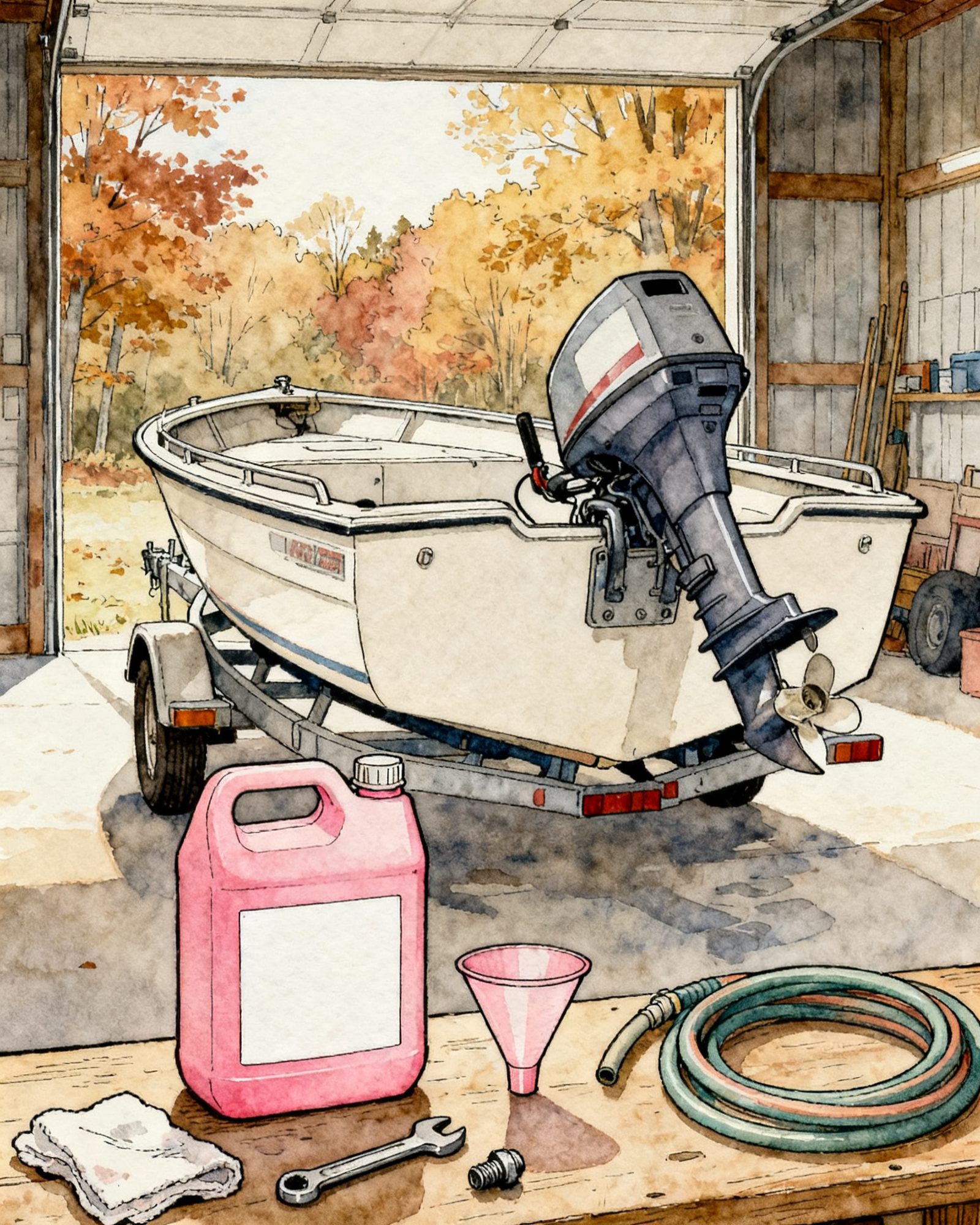
Fogging a boat engine means coating the inside of the engine with fogging oil before storage, so the cylinder walls, piston rings and bearings are not left bare to moisture all winter. In the general method Discover Boating describes, fogging oil is sprayed into the air intake of a warm, running engine until it stumbles or stalls, then into each cylinder through the spark plug holes. Many modern engines do it differently: some fuel-injected four-strokes take a little oil through the plug holes with the engine off, some direct-injection outboards fog themselves in a winterization mode, and some manuals do not ask for fogging at all. The method in your owner’s manual is the one to use.
What fogging oil does
Discover Boating, the boat industry’s consumer site, explains the problem: while an engine sits, its oil drains down to the oil pan and leaves the cylinder walls, piston rings and crankshaft bearings exposed to moisture. Fogging oil adds a protective layer that stays on metal longer than engine oil. One direct-injection outboard maker’s guide puts the cause in one line: “Temperature and humidity changes during storage period can cause corrosion of internal engine components.”
Fogging protects the inside of the engine against rust. It does nothing for the fuel, the cooling water or the gearcase; those are separate steps in a lay-up, covered in how to winterize an outboard motor.
When to fog, and when the manual says otherwise
Discover Boating suggests fogging when the boat will sit for more than 60 days, and notes that in places with temperature swings, surface rust can form in as little as three weeks. Those are general figures; the engine maker’s manual is the authority for your engine.
Read the manual’s storage section before you buy anything, and check for three cases where a generic can and the general method below are the wrong approach:
- The engine has its own winterization mode. Discover Boating notes that some modern direct-injection engines have automatic fogging modes, and that modern outboards may use a fuel additive or an electronic “winterize” mode instead of fogging.
- The manual uses oil through the spark plug holes instead. One fuel-injected four-stroke manual does exactly that, with the engine off.
- The manual names a specific fogging product or entry point. On fuel-injected engines, Discover Boating warns against spraying oil onto sensitive sensors such as the mass air flow sensor.
Fog only after the fuel is treated and has been run through the engine; see boat fuel over winter: stabilizer, ethanol and the tank.
How to fog an engine: the general method
This is Discover Boating’s general method; its winterizing guide says older carbureted and two-stroke outboards may need fogging oil, while modern ones may use a fuel additive or a winterize mode instead. Check each step against your manual, which may change the order, the amount or the entry point.
- Stabilize and run the fuel. Treated fuel should already be through the fuel system before the engine is fogged.
- Warm the engine on water. Run it in the water or on the flushing device the manual allows until it is warm. Discover Boating lists fogging a cold engine as a common mistake.
- Spray into the intake while it runs. Spray fogging oil into the air intake or throttle body, at the entry point the manual shows. What to look for: the engine stumbles and smokes white; on many engines, keep spraying until it stalls.
- Turn the ignition off.
- Oil each cylinder. Remove the spark plugs and spray fogging oil into each cylinder.
- Turn the engine over a few times without starting it, to spread the oil on the cylinder walls.
- Refit the spark plugs and their caps, and anything you removed to reach the intake.
Fuel-injected four-stroke outboards: where makers part ways
This is the case owners search for most, and the sources do not agree. Each position below comes from a maker’s own document, attributed by kind, and none applies automatically to your engine.
- Oil through the plug holes, engine off. One outboard maker’s owner’s manual for a fuel-injected four-stroke drains the fuel system and then says: “Remove the spark plugs and put a teaspoon of engine oil or spray storage oil into the combustion chamber through the spark plug holes,” and “Turn the starter motor several turns to lubricate inside the cylinder.”
- A fogging oil made for these engines, with water supplied by flush muffs or a flush bag. Another outboard maker sells one fogging oil for “most modern fuel-injected four-strokes” and a different one for its two-stroke fuel-injected and carbureted outboards. That maker’s blog says: “The flush muff and flush bag methods are the only ones approved for fogging the engine for storage.” Muffs fit over the lower-unit inlets on models with one intake.
- Silent on fogging. A third outboard maker’s storage pages do not mention fogging and send owners to the owner’s manual for model-specific storage.
Discover Boating’s advice for fuel-injected engines applies whichever method the manual uses: keep oil off sensors such as the mass air flow sensor, and consult the owner’s manual for the correct entry point. The Virginia wildlife agency’s winterizing tips recommend having a brand-certified mechanic check the rig, especially a fuel-injected four-stroke.
Direct-injection outboards that fog themselves
One direct-injection two-stroke outboard has a long-term storage mode instead of hand-sprayed fogging; the operator’s guide says the engine is “fogged” and extra oil coats its internal parts. In outline, from that guide:
- Add the maker’s fuel conditioner and fill the tank; an empty tank is one of the listed reasons the engine “will not winterize”.
- Put the outboard in neutral. In the water, the water intake screens must be completely submerged; on a trailer, remove the propeller and attach a garden hose to the flushing port.
- Start the engine at fast idle and work the fast idle lever in the timed sequence the guide gives (at least 15 seconds, then another 15 seconds, on its side-mount remote control).
- The engine accelerates, fogs itself, and shuts itself off, after one to two minutes. If the engine exceeds 3000 RPM, the guide says, it may have been shifted into gear: turn the key off at once and start the procedure again.
- Do not start it again before storage. Leave it vertical until the powerhead has drained.
The sequence differs by control type and model, so use your guide’s version. The same guide notes that excess oil may appear on the skeg after this procedure, which is normal.
Inboards and sterndrives
On a gasoline inboard, one inboard engine maker’s winterization sheet fogs through the throttle body or carburetor: with the engine at operating temperature, lift the flame arrestor, “Pump or spray 4-6 ounces of oil into the throat of the carburetor or throttle body. Shut off the engine. Reattach the flame arrestor.” The same sheet warns: “Running the engine with the flame arrestor removed increases the possibility of fire or explosion if an engine backfire should occur and gasoline fumes are present.” Keep the time without it as short as the job allows, and never leave the flame arrestor off; Coast Guard minimum equipment rules, as summarized by the BoatUS Foundation, require an approved backfire flame arrestor on each carburetor of an inboard gasoline engine.
For sterndrives, Discover Boating says to warm the engine before fogging. Draining or filling the cooling system, the outdrive and the rest of the lay-up are in how to winterize an inboard or sterndrive.
The methods side by side
| Engine | How it is fogged in the sources | Engine running? |
|---|---|---|
| General method (Discover Boating) | Spray into the intake until it stumbles or stalls, then into each cylinder | Yes for the intake, off for the cylinders |
| Fuel-injected four-stroke, one maker | A teaspoon of engine oil or spray storage oil through the spark plug holes, starter turned several times | No |
| Fuel-injected four-stroke, another maker | Its own fogging oil, on flush muffs or a flush bag only | Yes, with water from muffs or a flush bag |
| Direct-injection two-stroke with a storage mode | The engine fogs itself in a timed sequence | Yes, on water, then it shuts itself off |
| Gasoline inboard, one maker’s sheet | 4-6 ounces into the carburetor or throttle body, flame arrestor lifted | Yes, at operating temperature |
Water to the engine while it runs
Any method that runs the engine needs water to it: in the water, in a test tank, or on the flushing device your manual approves. Makers disagree about running on hose devices. One maker approves flush muffs and a flush bag for fogging. Another maker’s manual says not to run the engine on its hose-connector flushing attachment at all, and runs it only in water or in a test tank with the propeller removed and the water level over 4 inches above the anti-ventilation plate. Find what your manual allows before you start the engine.
Safety
- Outdoors only. Exhaust contains carbon monoxide. One outboard maker’s manual says to never start or operate the engine indoors or in any space that is not well ventilated; the CDC calls carbon monoxide a colorless, odorless gas that can poison or kill. Fogging makes the engine smoke on top of its exhaust, so a garage or shed is the wrong place.
- Fire. Discover Boating says to fog in a well-ventilated area, keep a fire extinguisher nearby, and allow no open flames or sparks. Fogging oil is sprayed into a running engine, and fuel is present.
- The boat. Discover Boating also says to support the boat properly before starting the engine; on a trailer, check it is secure and the motor is clear to run.
- Moving parts. Keep hands, hose and spray tube clear of the propeller and belts, and remove the propeller when your manual’s procedure says to.
Common mistakes
- Fogging a cold engine (Discover Boating).
- Using a household spray lubricant or standard motor oil instead of fogging oil (Discover Boating).
- Spraying oil onto an air flow sensor on a fuel-injected engine instead of the entry point in the manual.
- Hand-fogging an engine whose manual uses a built-in mode or plug-hole oil.
- Starting the engine again after fogging “just to check”: one direct-injection maker’s guide says not to start it again after winterization is completed.
- Running it without water, even briefly.
Smoke and oil at the spring start
Expect it. One direct-injection outboard maker’s guide says an engine that was auto-winterized “will emit a puff of smoke on the first start of the season”, and that oil seen on the skeg after the storage procedure is normal; its pre-season check warns not to confuse that engine oil with gearcase lubricant, which is thick and clear. One four-stroke manual’s first-start routine warms the engine for 3 minutes in neutral, runs it for 5 minutes at the slowest speed, then for 10 minutes at half throttle, so the oil used for storage is circulated out. Smoke that keeps coming after that, or a rough idle that does not clear, is a reason to see a mechanic. The full spring routine is in getting a boat ready in spring after winter storage.
Common questions
Is it necessary to fog a boat engine?
For long storage, most of the engine makers' instructions summarized here oil the inside of the engine one way or another, though not always with a can of fogging spray. Discover Boating suggests fogging when the boat will sit more than 60 days. Some modern outboards rely on a fuel additive or an electronic winterize mode instead, so the manual, not the calendar alone, decides.
Do you fog a 4-stroke outboard?
In two of the three outboard makers' documents summarized here the cylinders get oil, but how varies. One maker's manual for a fuel-injected four-stroke puts a teaspoon of engine oil or spray storage oil through the spark plug holes; another maker sells a fogging oil specifically for its fuel-injected four-strokes. One maker's storage pages do not mention fogging at all. Follow the manual for your model.
Can I use a household spray lubricant instead of fogging oil?
No. Discover Boating lists using a common household spray lubricant (it names one brand) or standard motor oil instead of fogging oil among the common fogging mistakes. Fogging oil is made to cling to metal longer than engine oil. Use the product, or the oil, your manual names.
Should the engine be running when you fog it?
In Discover Boating's general method, yes: it sprays into the intake of a warm, running engine until it stumbles or stalls, then oils the cylinders with the engine off. One fuel-injected four-stroke manual does it with the engine off only, and a self-fogging direct-injection outboard runs its own sequence. A running engine always needs water.
Why does my boat smoke after fogging?
The storage oil burns off at the first start. One direct-injection outboard maker's guide says an auto-winterized engine will emit a puff of smoke on the first start of the season, and one four-stroke manual runs the engine at half throttle for 10 minutes so the storage oil is circulated out. Smoke that does not clear after that is a question for a mechanic.
Sources
- Discover Boating: Fogging an engine, how does it work?
- An outboard maker's owner's manual: off-season storage (PDF)
- An outboard maker's blog: approved methods for fogging
- A direct-injection outboard operator's guide: long-term storage mode
- An inboard engine maker's storage and winterization procedures (PDF)
Read next
What Boat Winterizing Costs and What Is Included
The cost to winterize a boat depends on size, engines, systems aboard, timing and storage. The factors in plain words, DIY supplies, and what to ask a yard.
Fuel Stabilizer for Boat Storage: Ethanol and the Tank
How to use fuel stabilizer for boat storage, why ethanol fuel separates, how full the tank should be over winter, portable tanks, E15 and fuel safety.
Boat Antifreeze: Which Kind and Where It Goes
Marine antifreeze explained: propylene glycol vs automotive ethylene glycol, what a -50°F burst rating means, where it goes on a boat, and how to dispose of it.
Outboard motor covers: full, half and vented hoods
How to choose an outboard motor cover: half hood, full or vented running cover, sizing by the cowling, moisture, covering a hot engine, and towing safely.
Winter Boat Storage: Indoor or Outdoor?
Indoor vs outdoor boat storage for winter: dry stack, heated or unheated buildings, a garage, a yard, a trailer or the water, and how to cover each.