Boat seat covers: protecting marine vinyl seats
Boat seat covers explained: what damages marine vinyl, seat covers vs a cockpit or full cover, pontoon seat covers, fitting them, and cleaning vinyl safely.
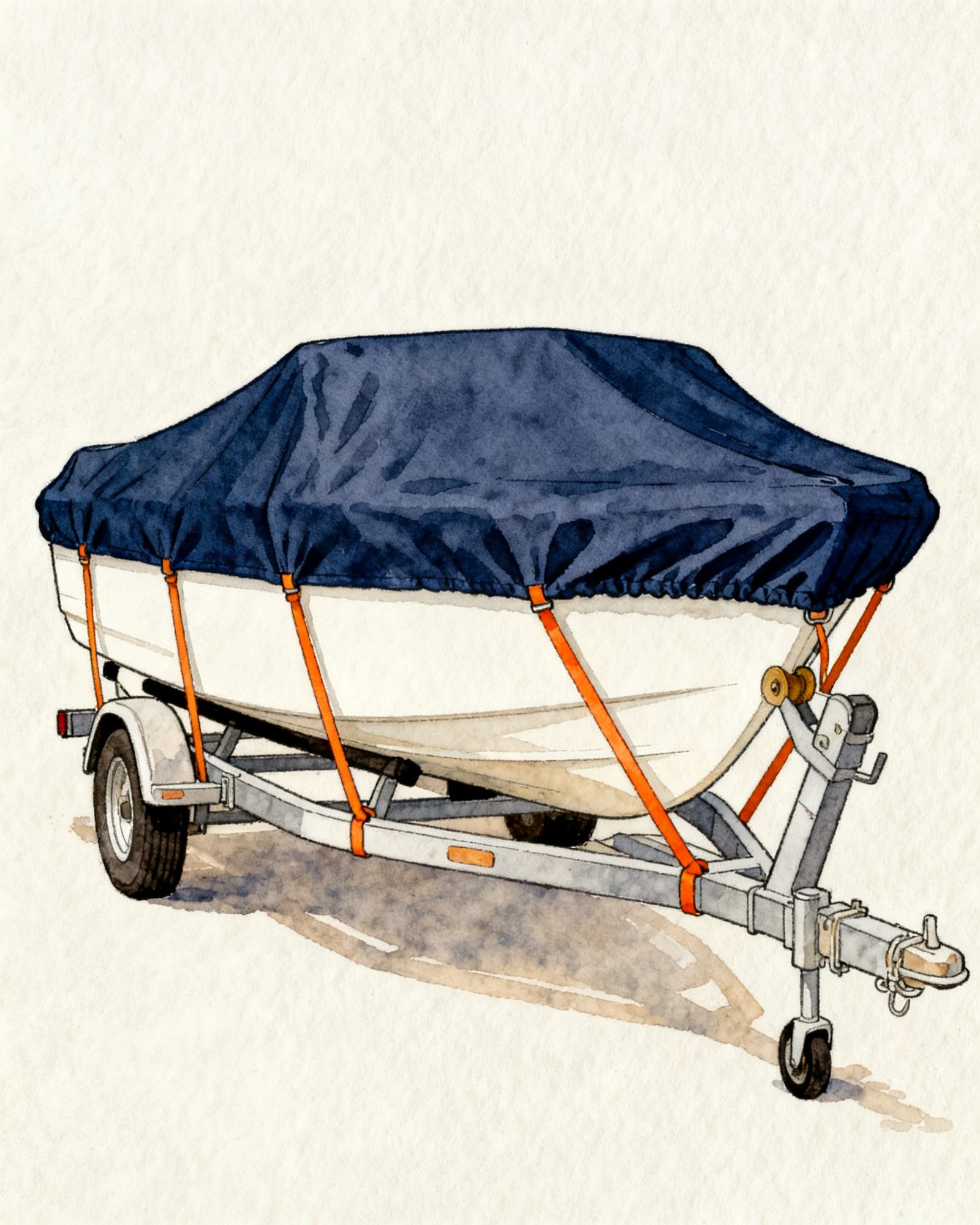
Boat seat covers are fitted covers that go over individual seats, benches or pontoon furniture to keep sun, rain, dirt and bird droppings off the upholstery while the boat is not in use. They make sense when the boat sits uncovered between trips, as many boats in a slip or on a lift do, and when putting a full cover on and off is more than you will do every time. They do not replace a cockpit or full cover for a boat left for weeks, and they only help if they breathe and go on over dry, clean vinyl. A marine vinyl maker’s warranty conditions put the rule in one line: “Boat owners should cover their boats when not in use and allow venting to avoid trapping moisture.” That is the job a seat cover has to do.
What damages marine vinyl seats
Marine vinyl is made to live outdoors, but four things still wear it out, and a seat cover only deals with some of them.
- Sun and weather. Marine vinyl is made with UV inhibitors, and a boat builder’s care advice treats them as worth guarding: it warns that some household cleaners strip them. Covering the seats whenever the boat is not in use, as the vinyl maker’s warranty conditions ask, is the main defense.
- Moisture that stays. A boat builder’s vinyl care advice warns that moisture can get trapped near the piping or in the sewing thread, and that “moisture leads to mildew which both discolors vinyl and makes it smell.” The same advice says to dry vinyl thoroughly rather than relying on air drying. Water that gets through a split seam or crack also soaks the foam, which then holds it for days.
- What people leave on it. Salt, sunscreen, sweat and food. The builder advises rinsing salt off after each outing and wiping off dirt, sunscreen and sweat with a soft cloth. The vinyl maker’s warranty excludes excessive staining from gear lubricant, ink, lipstick, motor oil, iodine, antiseptic, tomato-based sauces and sun lotion, which says a good deal about what stains vinyl.
- The wrong cleaners. Bleach, power washers, ammonia-based household cleaners and silicone vinyl treatments, covered in the cleaning section below. The vinyl maker’s warranty does not cover damage from improper installation or cleaning.
A cover deals with the first and keeps rain off, which helps with the second. It does nothing about sunscreen left on the seat, or about a cleaner that has already stripped the surface.
Seat covers, a cockpit cover or a full cover
| Option | Protects | Good for | Limits |
|---|---|---|---|
| Seat covers | Each seat, bench or cushion it fits | Quick cover between trips; boats under a T-top or bimini; pontoons with a lot of seating | Leaves the deck, carpet, helm and storage open to rain and dirt |
| Cockpit or bow cover | The whole open cockpit or bow, seats included | Boats in a slip or on a lift; see mooring covers | Needs snaps or fasteners on the boat; some pitch so rain runs off |
| Full boat cover | The whole boat down to or below the rub rail | Boats on a trailer or stored for longer | Slower to put on; a chore for a quick stop between trips |
| Cushions taken off | Removable cushions, completely | Winter and long breaks | Only works for loose cushions |
Seat covers are often used together with a bigger cover: seat covers during the season, when the boat goes out often, and a full or mooring cover for longer spells. On a pontoon, seat covers are common because a full pontoon cover is large and needs pitch and poles; pontoon boat covers compares the two.
Types of boat seat covers
- Helm and bucket seat covers. A shaped cover for a single seat, held by an elastic hem or a drawstring under the seat base. Some cover the pedestal too.
- Bench and back-to-back seat covers. Longer covers for bench seats and for seats whose backs flip to make a lounge. Back-to-back seats need a cover cut for the folded or upright position, so check which one a cover is made for.
- Pontoon seat covers. Covers for pontoon couches, including L-shaped and corner pieces. They are sold as individual covers for each piece of furniture or as sets. Measure every piece, because pontoon layouts vary widely even in one length.
- Leaning post and console covers. For center consoles: a cover over the leaning post and its seat, often combined with a console cover.
- Replacement upholstery covers. Not protective covers but new vinyl skins that replace or go over worn upholstery. When people search for seat covers for damaged seats, they often mean these. They are an upholstery job and are sized to the seat’s exact shape.
Measuring and fitting seat covers
A seat cover that is too big holds water in its folds and flaps in wind; one that is too small leaves vinyl exposed at the edges and strains its seams.
- Measure each seat separately. Width across the widest point, depth from front to back, and the height of the back from the cushion up. Look for: the widest point, which on many seats is the bolster or armrest, not the cushion.
- Measure the shape, not just the size. Note rounded corners, armrests, tapered bases and anything built into the seat, such as a cup holder or a hinge. Look for: anything that sticks out and will need room in the cover.
- Check how the cover will hold on. An elastic hem needs a lip or base to grip under; a drawstring or straps need a place to tie. Look for: a solid point to tie to that is not a hinge, a fuel line or wiring.
- Dry-fit before relying on it. Put the cover on and pull the hem under. Look for: a snug fit with no deep folds on top, and a hem that sits under the seat edge so wind cannot lift it.
- Leave a path for air. A cover tied tight all round a seat on a humid day traps the damp in. Look for: a vent, a breathable fabric, or an open lower edge where air can move.
Choosing the cover fabric
Seat covers are made in the same fabrics as boat covers: polyester, solution-dyed acrylic and vinyl-coated fabrics. The trade-offs are the same as for any cover, set out in boat cover fabrics compared. For seats, two points matter most:
- Breathability. The vinyl underneath does not breathe, so the cover has to. A vinyl seat under a vinyl cover is a sealed sandwich where condensation has nowhere to go. A breathable woven cover, or one with vents, lets damp air out; boat cover vents explains how venting works.
- Color transfer on a new boat. One cover maker advises against using its cover in the first four weeks of owning a new boat, because compounds released by a new boat can make the cover’s dyes transfer and stain the boat or its components. Check the cover maker’s instructions before putting a dark cover on new white vinyl.
Cleaning marine vinyl seats
Clean the seats before covering them, or the cover keeps the dirt company. A boat builder’s vinyl care advice is the basis here; check the seat maker’s own care instructions, which come first if they differ.
- Rinse. After each outing, rinse salt off the seats with fresh water. Look for: no gritty feel or white salt line along the seams.
- Wash with mild soap and water. The builder says to wash seats and sun pads regularly with a mild soap and water, and to use a soft cloth to remove dirt, sunscreen and sweat. Look for: an even, clean surface without a greasy film where hands and legs rest.
- Rinse again, so soap does not dry onto the surface.
- Dry thoroughly. Wipe the seats dry with a clean towel, paying attention to piping and seams, rather than leaving them to air dry. Look for: no water in the seams or under the piping.
- Cover only when dry. The vinyl maker’s warranty conditions say owners should not store or leave wet items on the product, and a seat cover over a wet seat is one of them.
What not to use, in the builder’s words: “Never use bleach or a power washer.” It also warns against household cleaners, naming an all-purpose spray cleaner, an adhesive remover and window cleaner with ammonia, which “may clean, but they’ll also strip marine vinyl of its UV inhibitor properties”, and against “automotive vinyl treatments with silicone which can break down key marine vinyl properties.” Whatever you use on any surface aboard, never mix bleach with ammonia: the CDC warns that it “can create toxic vapors.” The same CDC guidance calls for gloves, a mask and goggles when cleaning mold. Mildew spots on vinyl are where these rules matter most: since the builder rules out bleach on its vinyl, use the seat maker’s own care instructions, or ask a marine upholsterer, rather than reaching for a bleach-based mildew cleaner.
Seat covers themselves need cleaning too. Brush off dry dirt, then follow the cover’s care label; the routine for fabric covers is in cleaning boat covers. Let the cover dry fully before folding it away.
Seats over the winter
For a long lay-up, covering the seats is not enough on its own. Discover Boating’s lay-up advice is that air circulation to all sides of cushions is essential, and better still, to “remove all loose cushions from the boat entirely and store them somewhere warm and dry for the winter,” along with other fabric items aboard such as linens, blankets and life jackets. Store them standing on edge or on a rack so air reaches every side, not stacked flat on a damp floor.
Fixed seats that cannot come off stay aboard: clean and dry them, cover them with a breathable cover, and make sure the boat’s own cover is vented. Discover Boating calls adequate air circulation the best way of combating mildew, and the boat builder’s advice is the same: ventilation during storage is critical to minimizing mildew.
When a seat cover is not the answer
A seat cover protects good upholstery; it does not save failed upholstery. Look closely at the seats before buying covers.
- Cracks across the sitting area. A cover keeps rain out of the cracks but does not close them. A replacement skin or reupholstery is the fix.
- Seams that have opened. Water gets straight into the foam. A marine upholsterer or canvas shop can restitch a seam if the vinyl around it is still sound.
- Foam that stays wet or smells. Squeeze the cushion: water or a sour smell means the foam is holding water and growing mildew inside. That foam needs drying or replacing, and no cover fixes it.
- Stains in the vinyl itself. Stains from the list in the vinyl maker’s warranty, such as oil or sun lotion left to sit, often do not come out. Prevention, by wiping seats after use and covering them, works better than cleaning afterward.
For seats in good condition, the routine is simple: wipe after use, rinse off salt, dry, cover with something that breathes, and air the boat on dry days.
Common questions
Are boat seat covers worth it?
They are when the boat sits uncovered between trips, as many boats in a slip or on a lift do, or when the seats are new and the boat is used often enough that a full cover is a chore. A marine vinyl maker's warranty conditions ask boat owners to cover their boats when not in use, and seat covers are the quickest way to do that for the seats. If the boat already goes under a good cockpit or full cover every time, seat covers add little.
Can I put seat covers over damaged boat seats?
Yes, as a stopgap, but a cover hides the damage rather than stopping it. Water that gets through a crack or an open seam soaks the foam underneath, and a cover over wet foam keeps it wet. Dry the seat first, tape or repair the split, and plan on reupholstering when the vinyl is cracked across the sitting area.
How do I protect vinyl boat seats from the sun?
Keep them covered when the boat is not in use, with a seat cover, a cockpit cover or a full cover. Keep them clean, because dirt, salt and sunscreen left on vinyl do their own damage. A boat builder warns that household cleaners such as window cleaner with ammonia strip marine vinyl of its UV inhibitor properties, and that automotive vinyl treatments with silicone can break down key marine vinyl properties, so keep both off the seats.
What should you not use on marine vinyl seats?
A boat builder's vinyl care advice rules out bleach, power washers, household cleaners such as an all-purpose spray, an adhesive remover or window cleaner with ammonia, and automotive vinyl treatments with silicone. A marine vinyl maker's warranty also excludes damage from improper cleaning. Never mix bleach with ammonia-based cleaners on any surface: the CDC warns the mix creates toxic vapors.
Should seat covers be waterproof?
They should shed rain, but they also have to let damp air out. A fully waterproof cover that does not breathe can trap condensation against the vinyl, which leads to mildew. A breathable cover fabric, or a waterproof one with vents and a gap at the bottom for air, is the safer choice.
Sources
Read next
Center console cover options: full, console and T-top
A center console cover can mean three things: a full boat cover, a helm-only console cover or a T-top cover. How each fits, measuring, and towing.
Outboard motor covers: full, half and vented hoods
How to choose an outboard motor cover: half hood, full or vented running cover, sizing by the cowling, moisture, covering a hot engine, and towing safely.
Pontoon boat covers: fit, support and mooring
Pontoon boat covers explained: mooring, travel and playpen styles, measuring the deck and fence, support systems against pooling, and strapping for the road.
Bimini tops for boats: choosing bows, frame and fabric
How to choose a bimini top: 2, 3 or 4 bows, aluminum or stainless frame, round or square tube, acrylic, polyester or vinyl fabric, mounts, boots and pontoons.
How to measure for a bimini top: width, length, height
How to measure for a bimini top: mounting width between the mounts, length front to back, frame height from the mount up, plus headroom and folding clearance.